



Blog2_test
CFD analysis of airflow resistance in louvres
Louvres are widely used in ventilation and air-handling systems to allow airflow while shielding against rain, debris, and external elements. However, they also introduce flow resistance, which can lead to pressure losses and affect fan performance, energy use, and overall system efficiency. This raises a practical design question: how much pressure drop does a louvre actually create, and how can it be quantified accurately?
We used Computational Fluid Dynamics (CFD) to assess airflow through a louvre and determine its pressure loss coefficient (K-value).
How we simulated it
The louvre was analysed using steady-state CFD simulations in a 3D computational domain. To isolate the pressure loss caused by the louvre itself, simulations were performed with and without the louvre for three different inlet velocities.
Our setup included:
- Steady-state RANS CFD
- SST k-ω turbulence model
- Hexahedral mesh with prism layers
- Air modelled as constant density
- Three inlet velocities: 4, 12, and 36 m/s
This approach allows the pressure loss introduced by the louvre to be separated from the background pressure drop in the empty domain.


In the first case, we simulated a lift door opening while a person walks in or out. The lift was assumed to be well ventilated, while the lobby was not. Because the lift door is sliding, the door itself creates only limited airflow. Most of the air exchange is caused by the movement of the person.
Air exchanged:
- Person walking into lift: 0.42 kg of air
- Person walking out of lift: 0.56 kg of air (slide to see the animation)
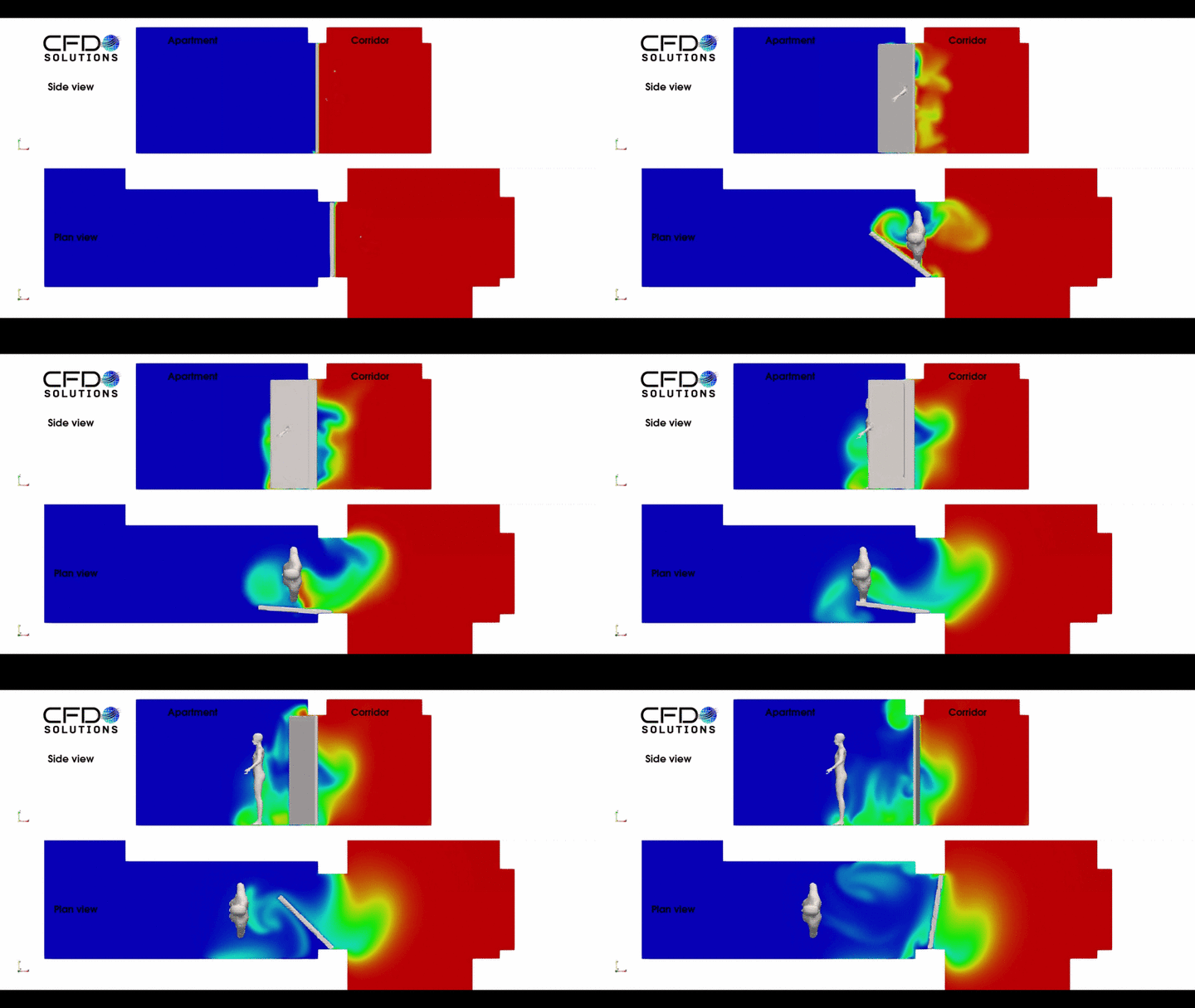
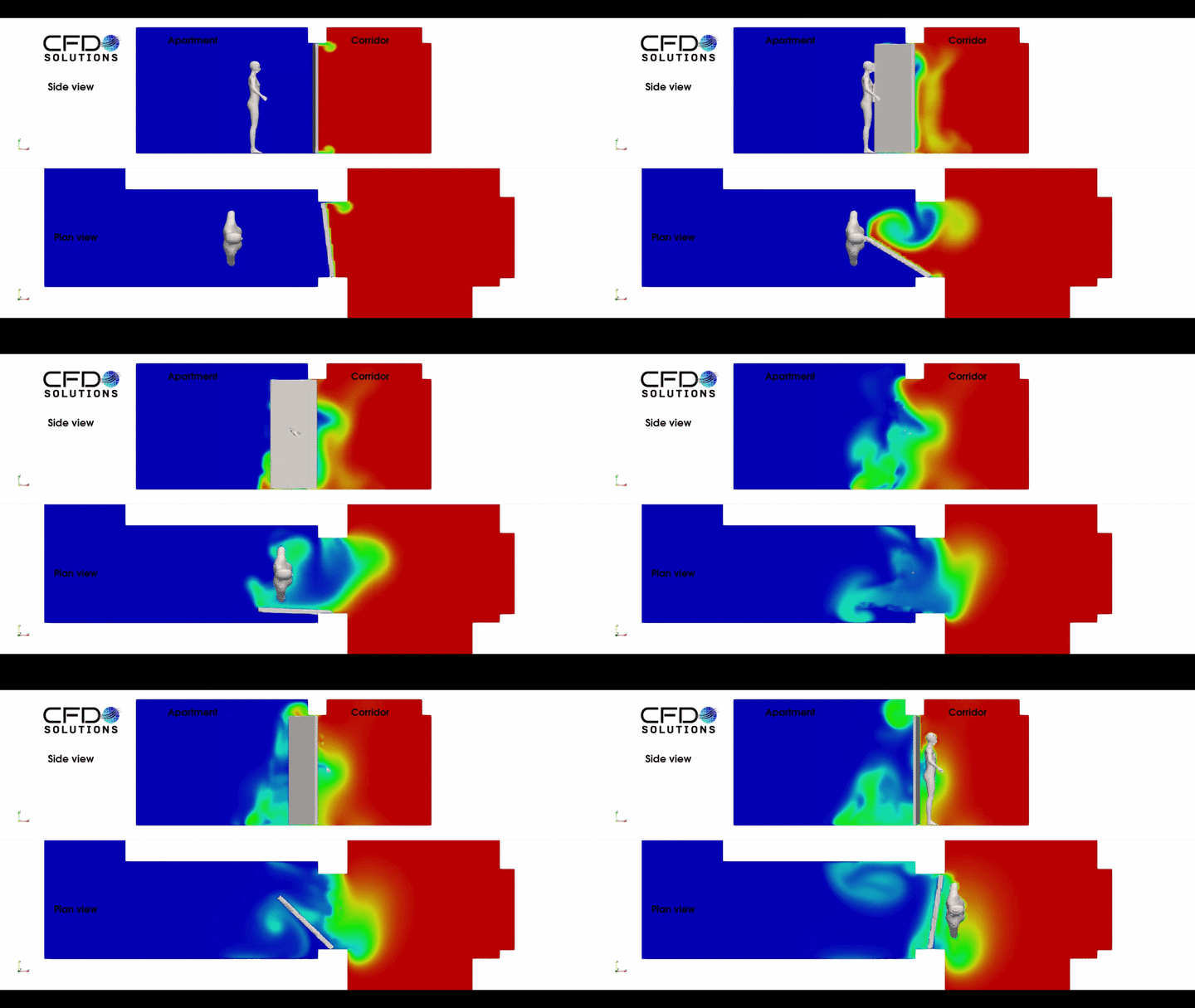
In the second case, we simulated an apartment door swinging open while a person walks in or out. The apartment was assumed to be well ventilated, while the corridor was not. Here, the door motion itself creates strong vortices, leading to much greater mixing than in the lift case.
Air exchanged
- Person entering apartment: 1.14 kg of air
- Person leaving apartment: 1.28 kg of air (slide to see the animation)
Why this matters
Accurate louvre pressure loss data is important for:
- HVAC system sizing
- fan selection
- energy performance assessments
- ventilation system optimisation
CFD provides a reliable way to evaluate pressure drop through louvres and similar flow restrictions, especially when manufacturer data is unavailable or project-specific geometry needs to be assessed.